As reported by 91Mobiles Hindi, the Redmi A1 will sport flat edges and a rounded back. The rear panel will also house a squarish camera module and Redmi branding. The front of the phone will have a waterdrop notch screen surrounded by bezels and a chin at the bottom. The volume rocker and power button appear on the right edge, as per the official-looking renders. Furthermore, the handset will measure 164.9mm x 76.75mm x 9.09mm and weigh 191 grams. The phone will be available in three colour options: black, green, and blue, which has been officially confirmed by the company as well.
Redmi A1 specifications
Coming to the specifications, the Redmi A1 will reportedly sport a 6.52-inch HD+ display with 1,600x720p resolution and a 20:9 aspect ratio. The phone will be powered by MediaTek Helio A22 chipset paired with 2GB of LPDDR4X RAM and 32GB eMMC 5.1 storage, which is further expandable up to 1TB. There are rumours for a 3GB RAM variant as well. Moving on, the handset will be driven by a 5,000mAh battery with 10W charging support and run Android 12 out of the box. The handset is likely to have Xiaomi’s custom Android skin MIUI 13.
In optics, the phone is said to sport dual rear cameras with an 8MP (f/2.0) primary sensor and an Auxiliary sensor with f/2.2. Up front, it could pack a 5MP (f/2.2) sensor for selfies and video calling. The Redmi A1 will come with camera features such as portrait mode, time-lapse, short video, and more. That said, it seems the Redmi A1 will not come with a fingerprint scanner.
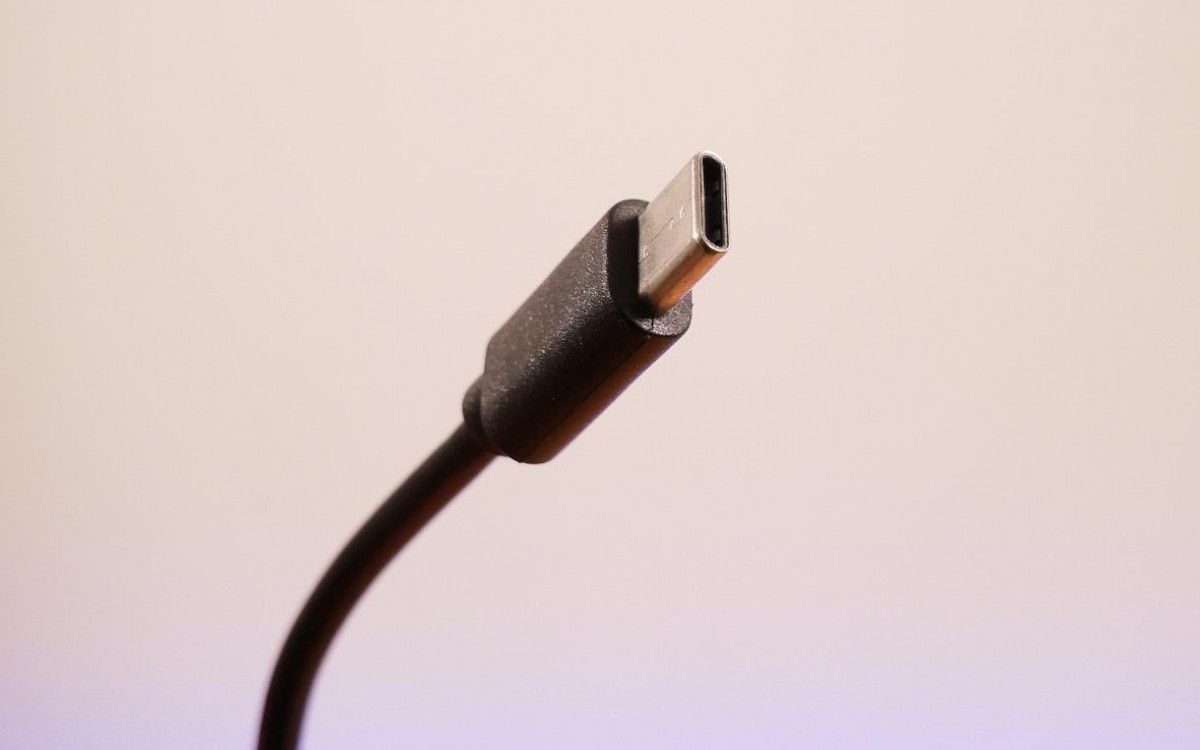
The USB Promoter Group just announced the new USB4 Version 2.0 standard enabling transfer speeds of up to 80 Gbps, which is twice as fast as the previous version of the same protocol.
The new active 80 Gbps Type-C cables are backwards compatible so you can use them with connectors supporting USB4 1.0, USB 3.2, USB 2.0 and Thunderbolt 3 and vice versa - older USB-C cables will work on USB4 Version 2.0 ports even if they won't deliver the high speeds.
The biggest advantage of the new protocol can be utilized by high-performance displays, storage and hubs and docks.With 80 Gbps of bandwidth, you may be able to connect an external GPU to a laptop and get a desktop-like gaming experience with little to no compromise in performance. Moreover, the new standard plays well with the latest versions of DisplayPort and PCIe.
More details about the new protocol will be shared during the USB Developer Days 2022 conference on November 1.
The draft proposal also mandates that manufacturers improve the battery life of smartphones
Source: AP
A new draft proposal published by the European Union may force smartphone manufacturers to provide better care for their devices if the plan goes through.
Under the proposal, the EU will make it compulsory for smartphone manufacturers like Apple, Google and Samsung to provide spare, replacement parts for battery, displays, chargers, back covers, SIM and memory card trays for a period of five years.
The EU wants to reduce the carbon footprint of smartphones across Europe. The bloc says that forcing manufacturers to extend the life of their products by five years will help reduce e-waste and bolster the recycling rates of material required to make new smartphones.
The EU is also proposing a new energy label for smartphones and tablets that will indicate the battery life and provide information on the phone's water and dust resistance. A rating that will tell users how resistant a phone is to accidental drops is also on the cards.
If manufacturers cannot provide a replacement battery for their devices, they will have to undergo a rigorous test instead and ensure that their batteries can achieve 80 percent of the rated capacity after 1,000 charge cycles.
The EU will also mandate software and app support for devices for a period of five years, more specifically functionality updates and improvements for three years and security updates for five years.
The only exceptions to the new proposal are phones that have bendable/flexible displays like the Samsung Galaxy Z line-up and rugged smartphones designed for hazardous environments.
The EU has also been hard on companies to support one universal USB Type-C charging standard, but companies such as Apple have fought back and said the rule limits innovation. Either way, once the new law passes, Apple will have 24 months to comply.
Invite your friends and family to sign up for MC Tech 3, our daily newsletter that breaks down the biggest tech and startup stories of the day
Not for the want of performance or versatility, but Lightning was outshone by USB-C in terms of universal adoption, helped tremendously by Android phones
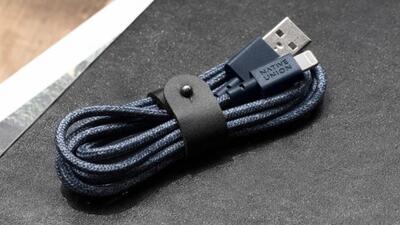
It was 10 years ago, back in September 2012, when Apple introduced the world to the iPhone 5. Then the most powerful iPhone, and the biggest design change ever for iPhones. But there was more, something that withstood the test of time — The Lightning Port. Apple announced the switch from the 30-pin connector to Lightning, comparatively more compact, reversible usage and what executive Phil Shiller called “a modern connector for the next decade”.
All Apple iPhones, and indeed all generations of AirPods wireless earbuds, AirPods Max headphones, the iPad (the most affordable one; alongside older iPads, iPad Mini and iPad Pro that you may own) and even the Apple TV rechargeable remote still use the Lightning port. Schiller had promised the longevity about as long as a decade, and Lightning has delivered to the hilt.
End of Lightning? Unlikely it’ll be this year
It may continue to, at least for a while longer. Despite the clamor for a universal charging cable standard (in other words, the USB-C standard), Lightning may likely hang around for another year. We may not see the new iPhone 14 series (at least all new iPhones if there is even the slightest indication of Apple’s intent to switch) move on from the Lightning port just yet.
We are just days away from Apple’s annual September event, where the iPhone 14 series is expected to be unveiled.
Lightning showed the way: reversible convenience
In its time, Lightning’s reversible usage and design gave it a definite usability advantage over the comparatively clunky micro-USB standard, which many devices over the years (Android phones, Bluetooth speakers, tablets, game console controllers, power banks, digital cameras etc.) used. If you have ever tried to plug in a micro-USB cable without looking down (or with the lights turned off), the chances of success were as high as the 2022 version of Daniel Ricciardo winning a Formula 1 race this season.
Convenience was added to, by the ecosystem of third-party cables (many Apple certified, mind you, and equally millions that weren’t), that were designed to be rugged.
Lightning as a standard has, and this was to be expected, since been surpassed. USB-C is a newer standard and seen a couple of major iterations already. Interesting to note how the reversible usage has been adopted. Yet, there is one drawback of USB-C as a standard – unlike Lightning which didn’t have connectors in the middle of the port, USB-C does.
Harsh usage, dust accumulating inside the ports or purely because of bad luck, the chances of the USB-C port on the host device getting damaged are quite high.
Where USB-C shines: almost universal adoption, led by Android
Speed isn’t the reason why there are calls for one charging cable, across personal tech that we buy. Lightning, with the very first iPad Pro line-up quite a few years ago (it was 2015, if memory serves us well), got the requisite speed bump to support data transfer speeds up to 5Gbps (up from the previous standard that was limited to 480Mbps). This meant external displays with Ultra HD resolution and more are supported, and large file transfers are a cinch.
USB-C has many standards actively in use, and things can get complicated to wrap your head around them all. The crux of the matter is this – the fastest (that is the USB 3.2 Gen 2X2, also called SuperSpeed+), has a theoretical top transfer speed of 20Gbps.
Universal adoption, instead, is the reason. While devices that traditionally used micro-USB made the switch to USB-C (and numbers swelled quickly), Android phones led the rapid transition. Almost every Android phone now uses the USB-C port, and that’s been the case for a couple of years now. Feature phones still rely heavily on micro-USB. Meanwhile, Lightning remained exclusive to Apple’s own devices.
The thing is, Apple’s own MacBook Pro and iPad Pro have over time, adopted USB-C. That has simplified things for users who also use other devices.
Regulatory intervention: Environment, simplification, and costs
Regulators in the EU have mandated all personal tech devices (including iPhones) must use the USB-C port by the fall of 2024. That gives Apple about 24 months from now, to switch the iPhones to the new standard. The EU’s pitch is simple – consumers will save money they’d have otherwise spent to buy new chargers, and more than 11,000 tonnes of e-waste annually (that’s just in the EU countries) will be saved in the form of disposed or unused chargers.
Last month, India also made its first move. An expert committee will be set up soon, to prepare a plan for the shift to a universal charging standard for gadgets. The process will include discussions with manufacturers, industry associations and equipment manufacturers (OEMs).
“With each passing year, the number of smart devices owned by consumers has been on the rise, necessitating the need for periodic changing. More importantly, such a move (to common chargers) will fuel sustainability and minimize e-waste,” said Prabhu Ram, head of Industry Intelligence Group at CyberMedia Research, while speaking with HT.
According to the 2020 Global E-Waste Monitor, as much as 53.6 million tonnes of e-waste is generated annually. Of this, discarded or outdated mobile phone chargers make up for around 54,000 tonnes globally (that’s a 0.1% share). A small step, to solve a larger problem?
Vishal Mathur is Technology Editor for Hindustan Times. When not making sense of technology, he often searches for an elusive analog space in a digital world.
Personalise your news feed. Follow trending topics
September kickstarts what is arguably the most riveting time for tech launches every year. Biggest of them all, the Apple Event is earmarked for September. Now, September, this year, brings a host of new exciting smartphone launches including the iPhone 14 Series, ROG Phone 6D Ultimate and more. Read on to know about the tech launching in September, 2022.
Apple Event: iPhone 14 Series, Apple Watch Series 8 and ‘Pro’
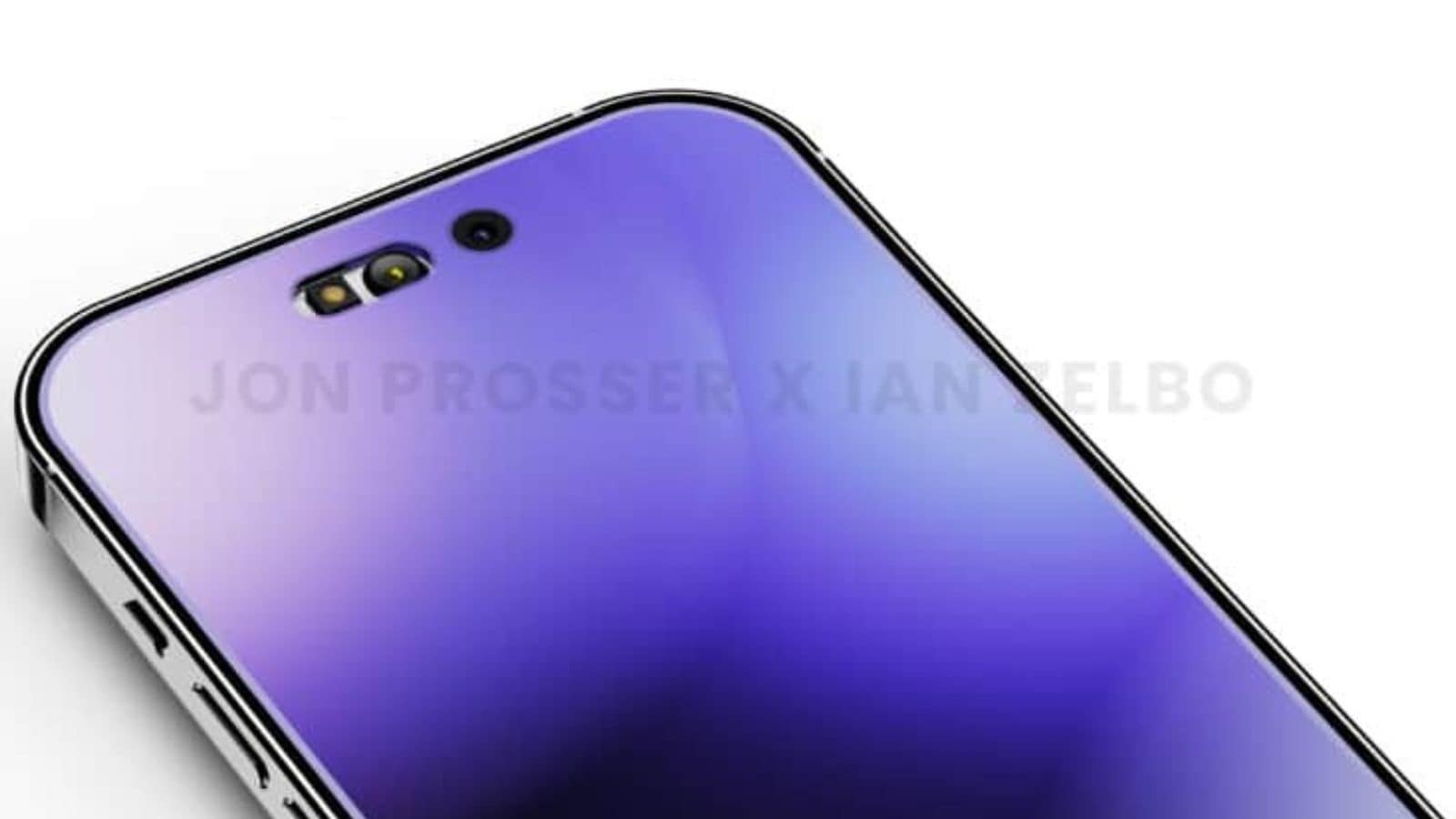
Apple has announced its “Far Out” event for September 7, 2022. The new iPhones are expected to see a price hike this year. Multiple reports, including one by the noted analyst Ming-Chi-Kuo, claim the starting price of the iPhone 14 Pro and iPhone 14 models could start at $1,049 and $799 respectively.
Moreover, it is expected that only iPhone 14 Pro and 14 Pro Max are to ship with the new A16 Bionic processor this year, with Apple choosing to retain the older A15 for the standard models – iPhone 14 and iPhone Plus. The new models are also expected to feature an updated primary 48 megapixel camera sensor from Sony.
The Apple Watch Pro, according to rumors, is expected to include a bigger 1.9-2.0-inch touchscreen and a 47mm case. The Apple Watch Pro may have a significantly larger form factor. It may also have a squared-off, flat design to increase the watch’s durability. On the other hand, Apple Watch Series 8 is expected to feature more of the same that the current Series 7 offers, albeit with a new S8 processor.
Poco M5 Launch and The Debut of Helio G99 in India
Poco is set to launch its M5 smartphone on September 5, 2022. Poco is yet to confirm the specifications, but it is supposedly going to feature a 6.5″ FHD+ display with a 90 Hz refresh rate. Earlier in August, Poco’s Twitter account had teased that their new phone would be the first to feature the MediaTek Helio G99 chipset in India. WATCH VIDEO: Apple iPhone 14 Launch Date Revealed
Motorola Moto Edge 30 Event
On September 8, Motorola will organize an event that is expected to showcase the upcoming Moto Edge 30 smartphone. Rumors point towards it launching with the flagship Qualcomm chipset – The Snapdragon 8+ Gen 1. We might also see it donning a 6.5-6.8″ OLED display, 8/12GB RAM and a 4600 mAh battery. Chances are, that it will ship with Android 12, with Android 13 following suit in an update later this year. WATCH VIDEO: Stop Making This Common Mistake With Your Videos
Asus ROG Phone 6D Ultimate To Feature Dimensity 9000+
The ROG website indicates that the launch of the ROG Phone 6D Ultimate is set for September 19, 2022, at 5:30 PM Indian Standard Time, or 8:00 AM, if you are in New York. ROG Phone 6D is going to feature the MediaTek Dimensity 9000+ chip. Also, it is more than likely that the phone is going to share core components including the FHD+ 165 Hz display, the same 6000 mAh battery and AirTriggers that the other ROG 6 Series phones ship with.
Lenovo announced several monitors today, including new options for gaming or work.
The company unveiled the Lenovo Legion Y32p-30 Gaming Monitor and the next generation of the ThinkVision T32p-30, T34w-30, T24i-30, T32h-30, and S25e-30 commercial monitors.
The new monitors are set to launch in January 2023.
Lenovo announced a plethora of products today, including the innovative and flexible ThinkPad X1 Fold and the powerful ThinkBook 16p. Perhaps lost in the hype around a foldable PC, Lenovo also unveiled a long list of monitors. The company announced the Lenovo Legion Y32p-30 Gaming Monitor and the next generation of the ThinkVision T32p-30, T34w-30, T24i-30, T32h-30, and S25e-30 commercial monitors.
The Lenovo Legion Y32p Gaming Monitor has a 31.5-inch UHD display with a refresh rate of 144Hz and a 0.2ms response time. It also has Eyesafe Certified 2.0 blue light protection and auto-ambient brightness sensors to help with eye health and comfort.
With support for both Picture in Picture and Picture by Picture, the Legion Y32p should provide flexibility in a variety of setups.
Lenovo Legion Y32p Gaming Monitor
Lenovo Legion T32p
Display
31.5-inch WLED
31.5-inch WLED
16:9
16:9
3840x2160
3840x2160
Contrast ratio
1000:1
Viewing angle
178 degrees
178 degrees
Response time
0.2 ms
Refresh rate
144Hz
60Hz
Brightness
350 nits (typical)
350 nits
Ports
2x HDMI 2.1
USB-C
DisplayPort 1.4
HDMI 2.0
USB-C
DisplayPort 1.4
Audio out
RJ45
Ethernet
Certification
Eyesafe Certified 2.0
ENERGY STAR
TCO
Lenovo ThinkVision T34w(Image credit: Lenovo)
The next wave of ThinkVision monitors builds on their predecessors by adding modern specs to well-known designs. The ThinkVision T32p-30 has a 31.5-inch 4K UHD IPS display that covers 99% sRGB. It can reach up to 350 nits of brightness, which should be enough for most office spaces.
The ThinkVision T34w-30 is wider than its ThinkVision siblings. It features a 34-inch WQHD curved display with a 21:9 aspect ratio and a 1500R curvature.
At $179, the ThinkVision S25e-30 is aimed at small and medium businesses. It has a 24.5-inch FHD display. Its 1920x1080 resolution and 75Hz refresh rate are relatively modest specs, but they're ideal for office work.
Last month, Apple released iOS 15.6.1 update to fix zero-day exploits asking all iPad and iPhone users to update their devices to the latest version. Now, the Cupertino-based tech giant has released a rare critical security update for those with older iPhones and iPads.
Available for the iPhone 5s, iPhone 6, iPhone 6 Plus, iPad Air, iPad Mini 2, iPad Mini 3 and iPod touch (6th gen), the security update bumps the software version to 12.5.6, has the build number 16H71 and is 275 MB in size. It looks like the update fixes a security vulnerability (CVE-2022-32893) that the company recently patched with its iOS 15.6.1 update.
The security update patches an exploit in Safari that could let unauthorised user process maliciously crafted web content and lead to arbitrary code execution. The developers seem to have addressed it with improved bounds checking. Apple said they are already aware of a report suggesting that the issue might have been actively exploited.
Also, in case you are wondering, iOS 12 is not impacted by CVE-2022-32894. Needless to say, those on iOS 12 are advised to update their devices to iOS 12.5.6 as soon as possible. If you happen to own one of the aforementioned devices, you might already have a notification on your device. In case you want to manually update your device to the latest version, open the ‘Settings’ app, navigate to ‘General’ and tap on ‘Software Update’.
Subscriber Only Stories
Also, Apple will be launching the iPhone 14 series alongside iOS 16 on September 7. Unfortunately, anyone using the iPhone 8 and older will not be updated to iOS 16.