OnePlus is bringing its affordable smartwatch to the market which works with both Android and iPhones via Bluetooth.
OnePlus has launched its affordable Nord Watch in India this week. The new smartwatch from the brand will be available from Tuesday and carries an AMOLED display, supports Bluetooth for pairing and has plenty of sports modes to keep the users engaged. You can use it with both Android and iOS devices.
OnePlus Nord Watch Price In India
OnePlus Nord Watch has launched in India for Rs 4,999 but with special bank offers you can avail discount of Rs 500. The smartwatch can be bought from the OnePlus India website and the watch will go on sale from October 4 onwards.
OnePlus Nord Watch Features
The company has been teasing the features and design of the smartwatch for the past few days and now it is finally here. The OnePlus Nord Watch gets a 1.78-inch AMOLED panel that gets a 60Hz refresh rate screen which offers 500 nits of peak brightness. You have 100 watch faces to refresh the look and feel of the watch.
The wearable connects to an Android phone or an iPhone via Bluetooth 5.2 and you can sync all the data on the device with the N Health app. Nord Watch has features like the heart-rate sensor, SpO2 monitor, menstrual tracker, stress sensor and more. The watch case is made of zinc alloy along with the silicon strap. It weighs around 52 grams with the strap and you get a magnetic charger in the box.
It also gives you 105 sports modes ranging from cycling and running to swimming and others. Nord Watch also comes with an IP68 rating which makes it dust and water-resistant. It has a 230mAh battery that the company claims will last you for around 10 days on a single charge.
You should junk your old iPhone immediately. Experts tell you why.
Apple iPhones come with long years of security and OS updates and you can probably use them for year and years. Sadly, however, even your mighty iPhone has an end-of-life date! Reason is that after a few years, Apple avoids providing the essential updates to the older iPhones. And that means old iPhones are prone to attract hackerswho can easily get into your device.
Security experts Kaspersky explained that the closed Apple ecosystem only permits apps that don't access the phone's root coding but also reduces both the need for iOS antivirus and makes an iOS antivirus impossible to create for App Store approval. However, security experts have also warned that iOS is not invulnerable to malware attacks. That means, “if Apple misses any vulnerabilities or chooses certain undesirable approaches to security, you will have little to no control over this.”
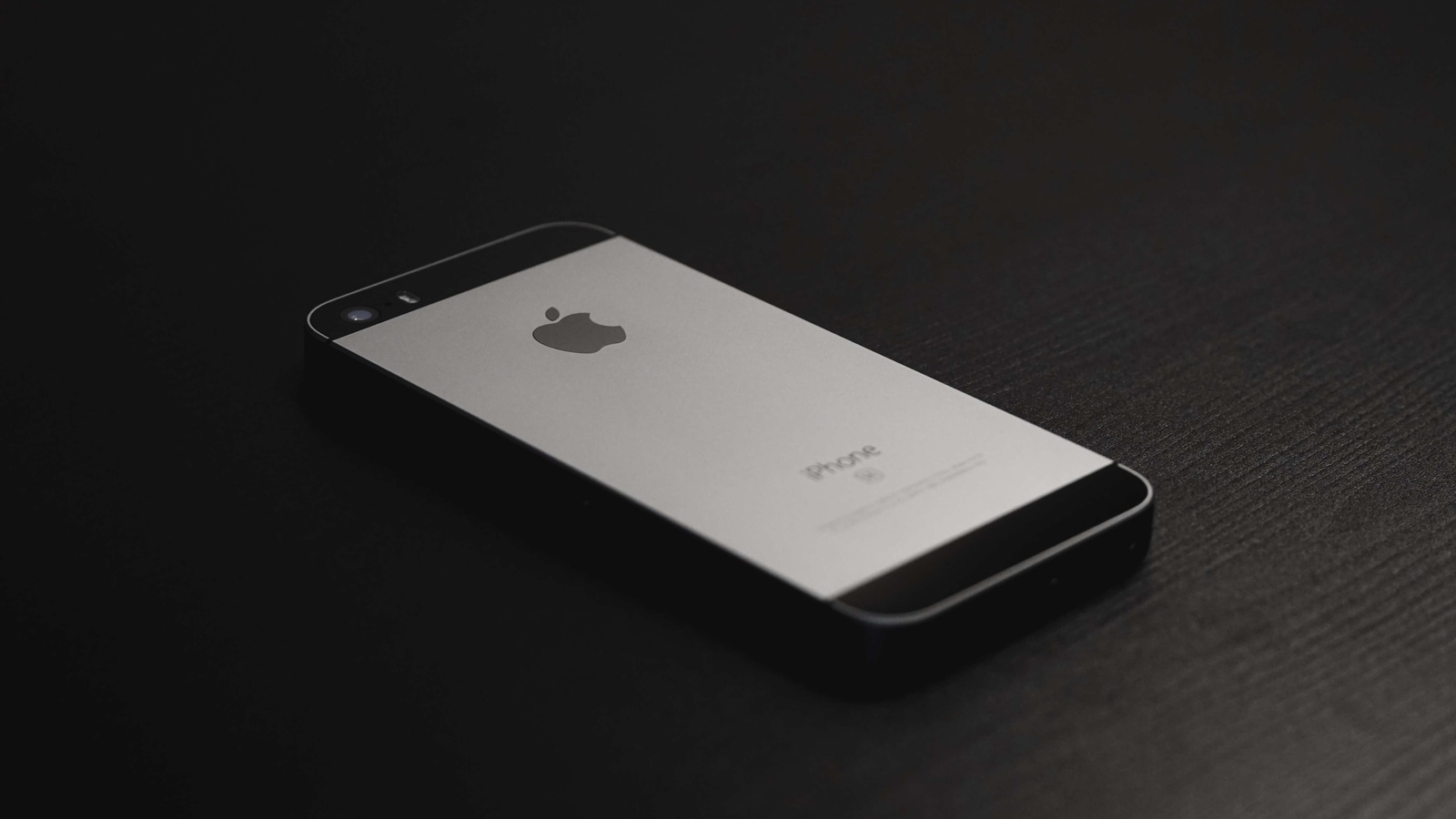
Hence, Kaspersky experts urge users to consider replacing older iPhones if they are no longer actively getting operating system updates. Recently, Apple has released the latest iOS 16 update, and there are a bunch of models that are left unsupported. The list includes - iPhone, iPhone 3G, iPhone 3GS, iPhone 4, iPhone 4S, iPhone 5, iPhone 5C, iPhone 5S, iPhone 6, iPhone 6 Plus, iPhone 6S, iPhone 6S Plus, iPhone SE, iPhone 7, and iPhone 7 Plus.
If your iPhone is on the list, it is probably time to move on and get a new iPhone for yourself! Meanwhile, security experts have shared some tips to keep your mobile phone safe and secure. Have a look here.
How to keep your iPhone safe and secure
Stick to the Apple store to download official apps.
Never download apps without verifying their safety first.
Always update to the latest OS version as soon as possible.
Consider replacing your phone once it is unsupported by the OS.
Enable password protection on your OS, apps, and services when possible.
Always turn on multi factor authentication. Use the password plus biometrics — such as fingerprint scanning or facial ID.
With hybridworking on the rise and data mismanagement continuing to make headlines, you’d be forgiven for thinking that even the most unsuspecting users would be interested in securing their online privacy.
However, new data provided to TechRadar Pro by digital intelligence platform SimilarWeb indicates that the growth of veteran privacy-focused browsersMozilla Firefox and Opera is stalling.
A rough estimate of Opera’s user acquisition rate (based on traffic to the browser installation page) suggests June was an especially low point, marking a 23.1% decrease in pace of growth since the start of the year. There have been minor gains since then, but Opera appears to be becoming less and less attractive to new users.
Meanwhile, Firefox has fared even worse, perhaps as a consequence of the decision to focus on Mozilla VPN and other privacy products. In August, visits to the browser’s install page were down 7% on January, and its market share(opens in new tab) (which once sat at 30%) has fallen to just 3.35%.
The raw data shows that Firefox currently attracts only a few hundred thousand new users each month, while Opera is drawing in circa two million. Market leader Google Chrome, however, is thought to be used by more than 3.1 billion(opens in new tab) people.
The rise of the “big default browser”
The release of the figures by SimilarWeb coincided with a report(opens in new tab) published by Mozilla in late September 2022 that accused Google, Microsoft and Apple of “abusing their privileged position” to make it “difficult or impossible” for users to change the browsers set as default by the operating system.
Battle lines have already been drawn this year with the European Union’s antitrust legislation targeting Google, Apple and Meta’s stranglehold in browsers, search engines and other markets. Google also recently failed to overturn a €4.34 billion antitrust fine relating to restrictions on manufacturers of Android devices designed to “consolidate the dominant position of its search engine”, according to a spokesperson for the EU’s General Court.
Google Chrome and Microsoft Edge are both overwhelmingly popular defaults that trade almost entirely on brand recognition and their status as default options across multiple operating systems (Chrome on Chrome OS and Android, and Edge on Windows 11). Other “big defaults” include the macOS and iOS versions of Safari.
“Default settings can create burdens for consumers who prefer to use a browser other than the default, but who are unable to or unaware how to change their default. We know from our research that some consumers adopt unnecessarily cumbersome workarounds to stick with their preference,” the Mozilla report claims.
Mozilla’s report offers some explanation as to why operating system providers pursue these kinds of strategies, stating that the developers of “big default” browsers stand to profit from user data.
“Although consumers don’t pay to use browsers, their browsing history is valuable data for platforms with advertising businesses like Meta, Amazon, Google and Microsoft. It is not coincidental that many of these companies have yet to implement robust anti-tracking technologies in their browsers or deprecate third-party cookies,” said Mozilla.
However, the firm also acknowledged that Big Tech’s motives extend beyond data collection: the operators of the “big default” browsers make significant sums through advertisements served to users locked into their proprietary search engines.
“Google Chrome is captive to Google Search (powered by Google advertising) and Microsoft Edge is captive to Bing search (powered by Microsoft advertising). Independent browsers are the only companies able to freely consider search defaults on behalf of their consumers. They are also among the few companies to encourage discovery, evaluation, adoption and innovation of alternative search and advertising experiences.”
(Image credit: Shutterstock)
Browser choice
Although the likes of Mozilla and Opera have struggled of late, an enduring demand for “alternative” web browsers is supported by separate data from SimilarWeb.
From January through August, privacy-focused Brave Browser saw its estimated monthly downloads surge 272%. Admittedly, Brave saw just 17,827 and 66,340 hits to its installation page during these months, respectively, but that’s a significant rate of growth nonetheless.
These numbers suggest the continued success of “big default” browsers likely isn’t just the result of the suppression of alternatives, but also a function of user apathy and brand recognition.
While Big Tech seeks pure profit, privacy-focused browsers may simply be fighting amongst themselves. The growth in installs Brave has seen this year suggests Mozilla Firefox and Opera are losing market share to newer options, such as Brave and DuckDuckGo’s new Privacy Browser (for which we don’t currently have any data).
Crucially, the statistics also suggest that the push for web browser privacy may be a small movement, but one that’s still capable of gaining traction.
Apple’s decision to let users change their default browser in iOS 14 is a welcome one in the fight to get consumers to care about their online privacy, but the first step towards total browser independence is to abolish the idea of defaults completely – something that may never happen with Apple maintaining its own “big default” on the most popular mobile operating system in the US.
As things stand, Mozilla may have made the mistake of assuming that every ”big default” browser user is a potential convert. User apathy will always play into the hands of large and powerful companies; even minus suppression tactics, “big default” browsers would still trounce independent alternatives in monthly growth.
With a solution like inviting users to choose their own default browser from a list of privacy-focused alternatives, alongside simple, reasoned arguments for doing so, that apathy could wane. It’s just that legislating for something like this seems unthinkable to most lawmakers outside the European Union.
Mozilla, DuckDuckGo, and eleven other companies did recently lobby the US Congress to table a data privacy bill that would address Big Tech monopolies, default browsers, and unfettered data collection, but the chances of the move leading anywhere are slim, thanks to Big Tech’s lobbying resources.
In addition, the lack of regulations surrounding “revolving doors” (whereby politicians leave office, often for corporate positions, and use their connections to curry favor with lawmakers) in territories such as the UK and Australia mean that legislating for web privacy and freedom of choice for anonymous browsers there may turn out to be an extremely slow process, if not a completely insurmountable problem.
Would privacy-focused browsers see more even growth if users were given the option to make an informed choice between them? The problem, right now, is that we might never get to find out.
Reviewers should now have access to the press driver for RTX 4090 GPU, the soon-to-be-released Ada Lovelace flagship graphics card. This upgraded architecture brings 16384 CUDA cores (52% more than RTX 3090 Ti) and much higher clocks.
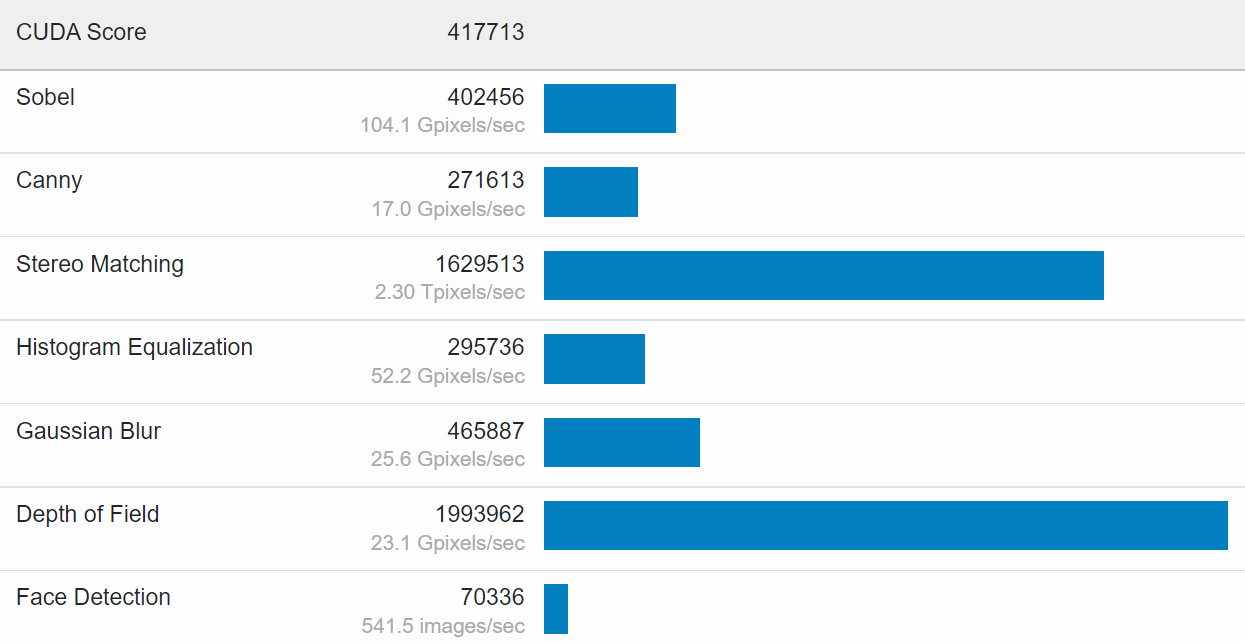
NVIDIA was reluctant to share any raster workload performance, or any gaming benchmark that would not involve DLSS. As a result, we still do not know how much faster RTX 4090 can be than RTX 3090 Ti in normal synthetic tests. As it turns out, somebody has already tested the card with Geekbench CUDA benchmark, where the GPU scores 417713 points (Update: there is a new score with 424332 points as well).
NVIDIA RTX 4090 test system specifications, Source: Geekbench
This particular RTX 4090 was tested on AMD’s latest X670E platform equipped with Ryzen 9 7950X and 32GB DDR5-6000 memory, so it really doesn’t get better.
NVIDIA RTX 4090 in Geekbench test, Source: Geekbench
A quick check shows that RTX 4090 is 60% faster than RTX 3090 Ti and 77.5% than RTX 3090 in the same test. That’s indeed a massive improvement for this type of test alone. Naturally, we cannot translate this performance to gaming. That’s an entirely different subject that will involve more than just raw GPU power.
Current NVIDIA CUDA API Geekbench ranking, Source: Geekbench
NVIDIA is to launch its RTX 4090 GPU on October 12th, but we might see the reviews sooner. More on that when we have confirmation, so stay tuned.
5G networks are coming to India and you need a good smartphone to experience it nicely. Check these out.
5G will now be a household name in India from now, and telecomoperators are promising greater things waiting for us in the future. Other than faster internet speeds on mobile data, 5G is all set to improve connection reliability with its wider bandwidth, and lower latency for quicker communications between IoT devices. Hence, it is only wise to get the nicest smartphones that let you experience 5G at its best. Luckily, we are in an age where there's an abundance of 5G smartphones in the market.
Hence, if you are planning to experience 5G at its best and budget is not a restricting factor, these are some of the best smartphones from various brands to experience 5G connectivity at its best.
5G smartphones: The best ones for India's 5G network
If you are in the iPhone territory and want to experience 5G, Apple has a slew of iPhones with 5G connectivity on almost all 5G bands available to the world. If your budget is less than Rs. 50000, you can choose from the iPhone SE 3rd Gen and iPhone 12.
If your budget is between Rs. 50000 and Rs. 70000, you can choose between higher storage variants of the iPhone 12, base iPhone 13 and iPhone 13 Mini.
If your budget is less than Rs. 1 lakh, you can pick up the new iPhone 14 and iPhone 14 Plus. Both of these use the Apple A15 chip with 5-core GPU.
If you can spend more than Rs. 1 lakh, the iPhone 14 Pro and iPhone 14 Pro Max are the best phones to experience 5G network.
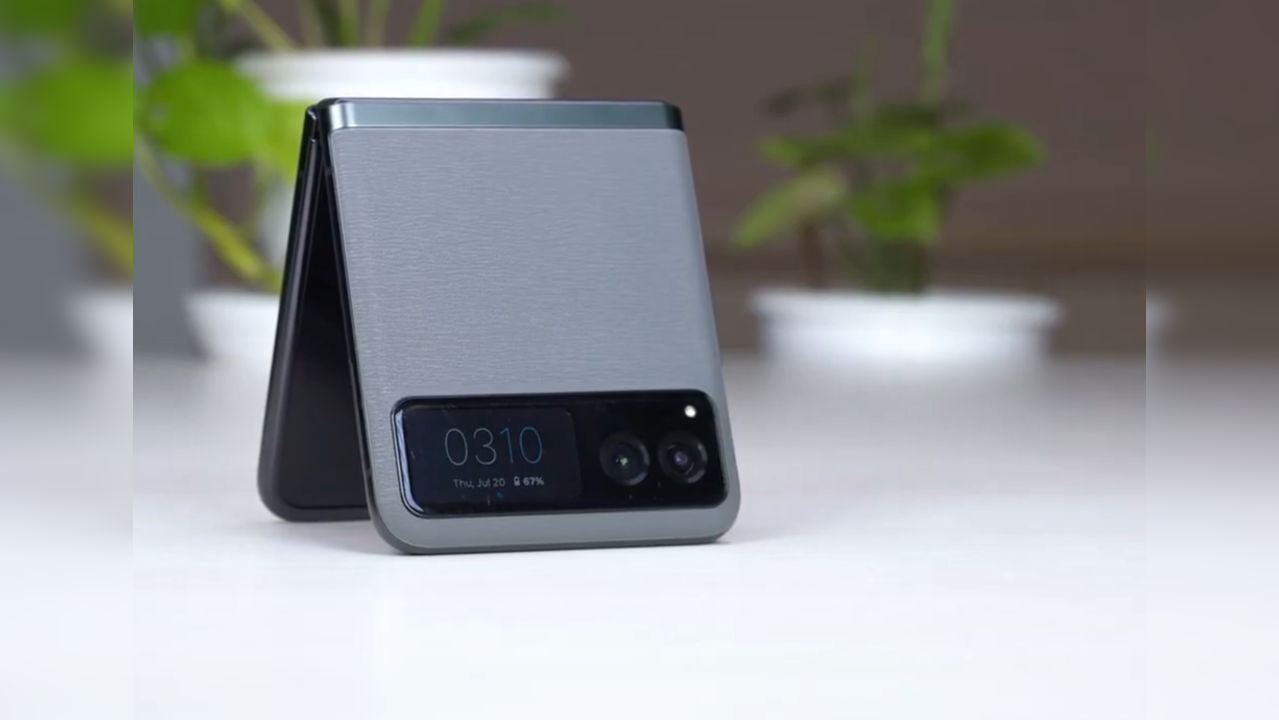
In the Samsung camp, there are some amazing smartphones with 5G connectivity to choose from. If your budget is less than Rs. 50000, you can choose from the Galaxy A53 5G, Galaxy A73 5G, and Galaxy S21 FE 5G. For less than Rs. 1 lakh, you can choose from the Galaxy S22, Galaxy S22 Plus, and Galaxy Z Flip 4. Above Rs. 1 lakh, you can choose the Galaxy S22 Ultra and Galaxy Z Fold 4.
Other options
From the Oppo camp, the Oppo Reno series as well as A series support 5G networks. Xiaomi fans can choose from the Redmi Note 11 Pro 5G, Xiaomi 11i series, Xiaomi 11T Pro 5G and Xiaomi 12 Pro 5G.
Note that most Android smartphones costing above Rs. 20,000 support 5G networks by default. You should always check for chipset supporting 5G networks.
Apple’s latest Adaptive Transparency feature, which was announced at company’s Far Out event and so far was exclusive to the new AirPods Pro 2, is now coming to the original AirPods Pro. The latest beta update of iOS16 is reportedly brings the feature to the first-gen AirPods Pro.
The setting to turn the feature on can be spotted on the third beta of iOS 16.1 update. According to report from Macrumors, a 5A304A beta firmware is required to see this update.
Apple first introduced Adaptive Transparency feature with its 2nd gen AirPods Pro. The feature was introduced to let AirPods block out loud environmental noises – such as construction works, chaos, loud music at a concert, etc without affecting the ambient sound.
“Transparency mode makes it possible for listeners to stay connected to and aware of the world around them. Now, Adaptive Transparency takes this customer-loved feature even further. The powerful H2 chip enables on-device processing, which reduces loud environmental noise — like a passing vehicle siren, construction tools, or even loud speakers at a concert — for more comfortable everyday listening,” Apple said while launching the new AirPods Pro.
Apple’s AirPods Pro 2 come with an upgraded H2 chip which improves the Adaptive Transparency functionality and AirPods Pro come with H1 chip, therefore – it is unclear how much is the one different from the other.
iOS 16 is available on iPhone 8, iPhone 8 Plus, iPhone X, iPhone XS, iPhone XS Max, iPhone XR, iPhone 11, iPhone 11 Pro, iPhone 11 Pro Max, iPhone 12, iPhone 12 Mini, iPhone 12 Pro, iPhone 12 Pro Max, iPhone 13, iPhone 13 Mini, iPhone 13 Pro, iPhone 13 Pro Max, iPhone SE (second generation and later), iPhone 14, iPhone 14 Plus, iPhone 14 Pro, and iPhone 14 Pro Max.