Rechercher dans ce blog

Wednesday, November 2, 2022

The 2022 Apple TV 4K offers solid updates to the best streamer - TechCrunch

Apple’s new and improved Apple TV 4K launches this week, going on sale online and in stores on Friday, November 4. After spending just under a week with the Wi-Fi + Ethernet version, I can say that it’s definitely a nice improvement over the existing version, delivering a couple of clutch forward-looking features that will appeal to people who have the right setups, as well as modest but noticeable performance improvements in certain areas. Those considering an upgrade from the version it replaces might want to think twice, however — read on to find out why.

The basics

Right off the bat, I should make clear that I firmly believe the Apple TV is the best option available in terms of streaming hardware. It has the best navigation, performance, color rendering and overall experience of any of the available options. That comes with a price — the Apple TV 4K costs more than most options from competitors like Amazon and Roku, but it’s a superior experience in just about every way that justifies the cost delta for me.

The new 2022 version continues to prove this true: It doesn’t mess with the winning formula that Apple has put together, and it offers a few new tricks that the outgoing version doesn’t have.

First, there’s the A15 processor inside, which is a multi-generation leap from the A12 that powered the Apple TV just introduced last May. The A15 comes with added RAM, and a 16-core neural engine versus the 8-core version on the older model, among other improvements.

Apple has also removed the fan in the Apple TV hardware, making for a slightly more compact, and much lighter, overall package. It’s a nice improvement, but not one that’s likely to make a material difference in terms of anyone’s home setup. The 2022 model also adds more differentiation between the $129 entry-level version and the $149 higher-end version, including both a hardware Ethernet port and a Thread modem (useful for forward-looking Matter device smart home support) on the latter.

Both versions get double the memory versus the outgoing 2021 Apple TV, with 64GB at $129 and $149 for 128GB. In both cases, that represents a $50 price cut when compared to the models they replace.
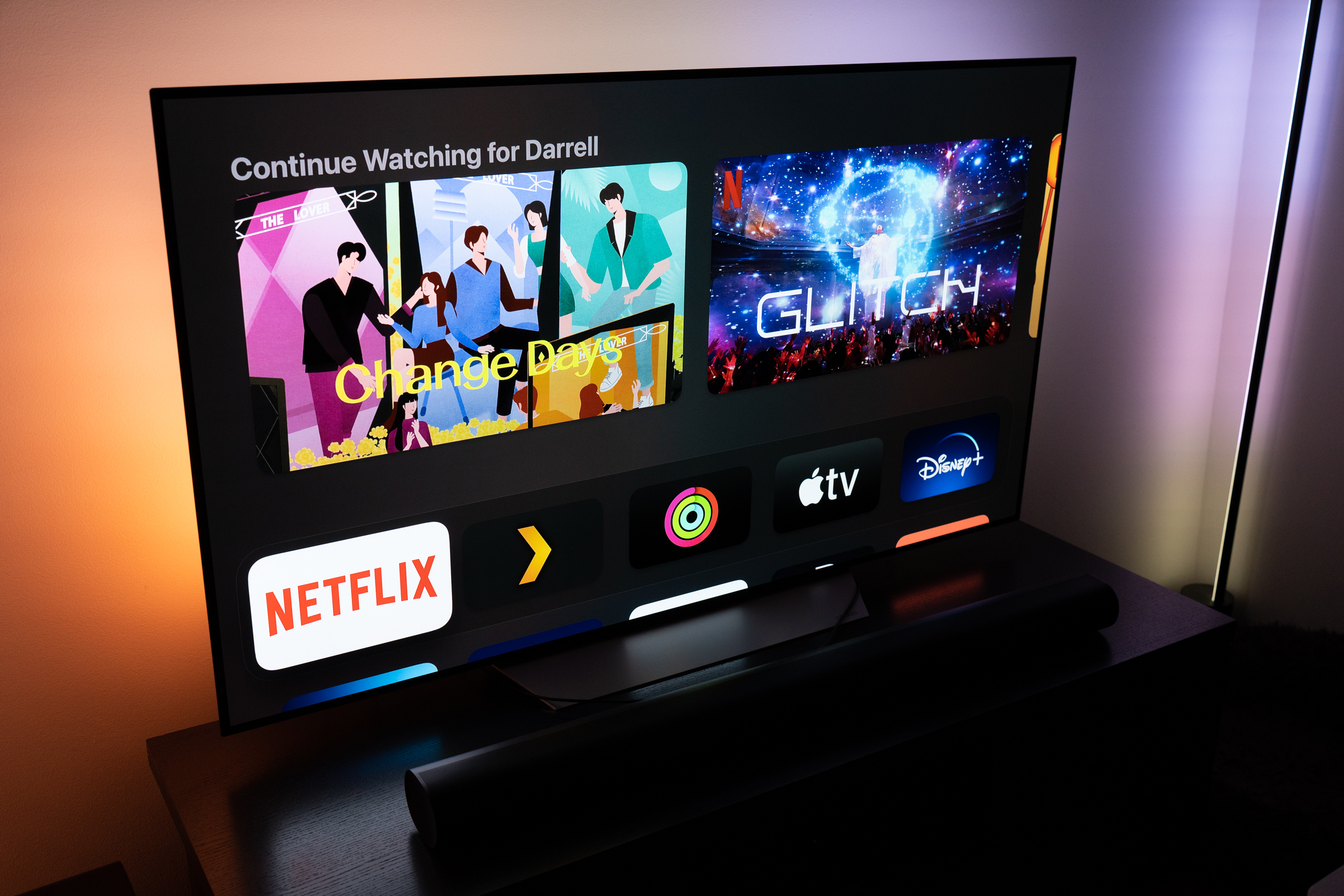
Apple TV home screen

Image Credits: Darrell Etherington/TechCrunch

Features and performance

If you have a 2021 Apple TV 4K, which I do, you probably aren’t feeling the pinch in terms of performance. In fact, I still have a first-generation Apple TV 4K in active use, and despite it now being six years old, I’d be hard-pressed to tell the difference between it and my 2021 Apple TV in a blind test.

That said, the 2022 Apple TV 4K does seem to generally make things snappier when it comes to navigating between the Home Screen and apps, and even potentially within apps as well. It also definitely offers a boost when it comes to using the Apple TV as a gaming device, helping it keep up with the most graphically demanding Arcade and App Store titles available. With expanded controller support via the most recent tvOS update, the Apple TV is a better gaming console than ever combined with the A15’s performance prowess.

The other key addition here in terms of features is HDR10+ support. In case you’re out of the loop on the myriad video quality standards out there, that’s essentially the version of high-dynamic range that Samsung espouses, as a direct competitor to Dolby Vision. Apple TV has supported Dolby Vision (and HDR10) content natively since the introduction of the first-generation Apple TV 4K, but this is the first time it has offered HDR10+.

I wasn’t able to test HDR10+ myself, as I don’t have any televisions that support it (my TVs are all older LG OLED, which support Dolby Vision), but this is a very welcome feature for owners of newer Samsung televisions, since Samsung seems dead-set against supporting Dolby Vision. Speaking of Dolby Vision, Apple has always offered excellent support here, and the latest version is no exception: Provided you have a fairly modern TV and you care about picture quality, it’s a terrific set-it-and-forget it way to get the most out of supported content.

Another excellent video quality feature that Apple has introduced here is something called Quick Media Switching (QMS_VRR), which gets rid of the momentary blackout that currently occurs when switching between different frame rates for different media. If you have the “Match Content” for frame rates turned on, you’ll be familiar with this, since it happens almost any time you start streaming an actual show or movie from most apps.

QMS will get rid of that blackout — once it arrives via a software update later this year. I also wasn’t able to test this because it’s not available, but it sounds like a nice-to-have feature, with the caveat that it only applies to switching frame rates, and not to switching color spaces like from standard- to high-dynamic range content.

Another similar “coming soon” feature is personalized Siri support, which recognizes different user voices and automatically plays content from their respective profiles, even if the TV is currently signed in to another family member’s account. I saw a demo of this which worked great, but once again wasn’t able to test it personally because it’s coming in a later update.
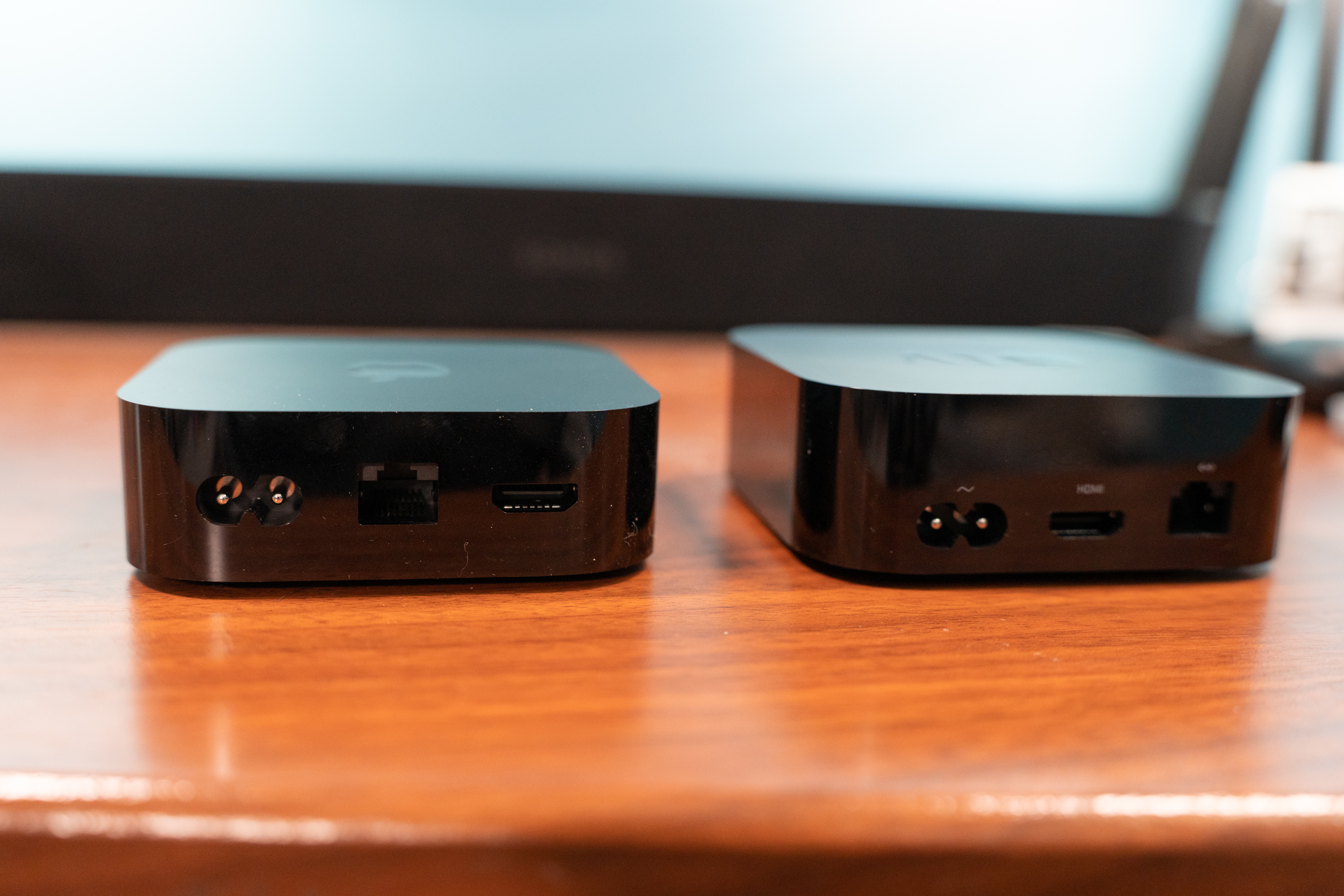
Apple TV 4K Wi-Fi + Ethernet 2022 vs. Apple TV 4K 2021

Apple TV 4K 2022 (left) versus Apple TV 4K 2021 (right). Image Credits: Darrell Etherington/TechCrunch

If you pay the extra $20 for the higher-end version (which I recommend basically anyone looking at buying one of these should, unless it’s for a secondary TV) then you also get that Gigabit Ethernet port and a Thread radio. The former is clutch for consistent, high-quality performance regardless of the conditions of your home Wi-Fi environment, and the latter is probably going to be key in a Matter-centered smart home future — which may not matter (get it?) to you very much depending on your needs. Again, it’s not something I was able to test in any way with my current setup, but if you think of it as essentially free with your purchase of an Ethernet port, it definitely adds value.

Apple has also introduced a new version of the Siri Remote, which makes one crucial change — it replaces the Lightning port on the bottom with a USB-C port. This may seem minor, but it means the only charging apparatus I need to have in my living room now is USB-C, so I’m very happy with the shift. If you’re new to Apple TV, the Siri Remote in my experience is an excellent control device, with easy access to voice commands via the dedicated button on the side, a smart touch-sensitive ring for easy seeking forward and back during playback and an attractive overall metal design.

Bottom line

Was the Apple TV 4K crying out for a hardware refresh? Definitely not. The outgoing version is an excellent performer that will continue to satisfy the needs of many customers for a long time yet. But the 2022 model adds some great hardware improvements that, along with the price cut, make it a no-brainer for anyone looking to get their first Apple TV or upgrade an aging Apple TV HD model.

Given how long the original Apple TV 4K from 2016 has remained relevant, you can bet the 2022 edition will be future-proof for quite a long time to come, in the context of both your entertainment setup and the future of the smart home.

Adblock test (Why?)


The 2022 Apple TV 4K offers solid updates to the best streamer - TechCrunch
Read More

The X-T5 is the first major upgrade to Fujifilm’s compact camera flagship in 5 years - Engadget

Fujifilm is delivering a follow-up to the well-received X-T4. The company has introduced (what else?) the X-T5, a sequel to the higher-end APS-C mirrorless camera that delivers some major technical upgrades — the largest in five years — while refining the basic formula. The new model now packs Fuji's current 40MP sensor (up from 26MP) that can shoot 6.2K video at 30 frames per second. You don't need to buy a top-tier cam like the X-H2S to venture beyond 4K. You can also expect a jump in computing power through the X-Processor 5 that allows for AI-based autofocusing, 4:2:2 10-bit output, F-log2 and support for the HEIF photo format.

The X-T5 design is also smaller, lighter and simpler than its predecessor, and moves the shutter button and front control dial for a better hold. There are some under-the-hood changes, too, including slightly better in-body stabilization (seven stops instead of 6.5), a mildly higher-resolution tilting LCD and an electronic viewfinder with 0.8X magnification instead of the X-T4's 0.75X. You'll theoretically notice improvements, then, even if the body still seems very familiar.

Don't expect many other changes. There are still dual UHS-II SD card slots, a USB-C port and HDMI. The X-T5 still uses the same battery, although Fujifilm says the upgraded processor should help with power management.

Fujifilm ships the X-T5 on November 17th for $1,699 for the body alone, $2,099 with an 18-55mm lens and $2,199 with a more flexible 16-80mm lens. It's debuting alongside a $599 XF30mm f/2.8 macro lens that can focus on subjects as close as 3.9 inches from the sensor, and just 0.5 inches from the 11-element glass. In some ways, this is a return to form. Our primary gripes with the X-T4 were its not-so-compact form factor and imperfect autofocus tracking — both of those are hopefully fixed. The price still makes it costlier than rivals like Sony's A6600, but the improved performance may help justify the premium.

All products recommended by Engadget are selected by our editorial team, independent of our parent company. Some of our stories include affiliate links. If you buy something through one of these links, we may earn an affiliate commission. All prices are correct at the time of publishing.

Adblock test (Why?)


The X-T5 is the first major upgrade to Fujifilm’s compact camera flagship in 5 years - Engadget
Read More

How to edit a sent message in Telegram: Here`s the step-by-step guide - Zee News

New Delhi: Last month, Apple introduced iOS 16, which included the capability to edit texted texts. Within 15 minutes of sending a message, iPhone and iPad users can amend it. Android SMS apps still don't have this capability. Even well-known messaging services like WhatsApp don't currently allow you to edit sent texts.

But did you know that Telegram provided the option to amend a message once it had been sent long before anyone imagined being able to do so after it had been shared with the receiver? After 48 hours of sharing a message, Telegram users can alter a transmitted message for the uninitiated. (Also Read: Want to download videos from Twitter? Here's the step-by-step guide)

How to edit a sent message in the Telegram app:

Open the Telegram app.

- Open the message you want to edit.

- Select the message for a long time.

- Click on the pin message option.

- Click on the edit option.

How to edit a sent message on a desktop:

- Open the Telegram.

- Open the message you want to edit.

- Select the message.

- Click on the reply option.

- Click on the edit option.

Adblock test (Why?)


How to edit a sent message in Telegram: Here`s the step-by-step guide - Zee News
Read More

DJI's Mavic 3 Classic drone drops a lens in return for a lower price - Yahoo Finance

DJI's Mavic 3 is a useful cinematic drone, but its steep price ($1,899 as we write this) can be off-putting compared to the $1,449 of the older Mavic 2 Pro. The company thinks it has a simple solution, though: offer a trimmed-back version. DJI has introduced the Mavic 3 Classic, a new variant that drops the telephoto lens in exchange for a better $1,469 starting price (more on that later).

The Classic otherwise includes the features that might draw you to the Mavic 3 in the first place. The centerpiece remains a 20-megapixel, 24mm-equivalent Hasselblad camera that can shoot 5.1K video up to 50 frames per second (4K at 60FPS) and capture 12-bit RAW photos. You can likewise expect a healthy 46-minute peak flight time, a range of up to 9.3 miles and an O3+ transmission system that can send 1080p 60FPS video to your remote. You're still asked to fly within line of sight, but an AirSense ADS-B receiver can warn you of nearby aircraft if you operate at higher altitudes.

This still isn't a trivial expense. The base price is for the drone only, and doesn't include a remote or charger. It's meant for upgrading DJI users who have the necessary gear. Everyone else will have to pay at least $1,599 for the standard kit, which includes the charger and the basic RC-N1 remote. Spend $1,749 and you'll get the display-equipped DJI RC remote. And if you need accessories, the $649 Fly More add-on includes two batteries, a charging hub, a car charger, three pairs of quiet propellers and a convertible carrying bag.

The Mavic 3 Classic clearly isn't meant for newcomers, or even many enthusiasts. You'll want to look at the $679 Mini 3 Pro or $999 Air 2S if you're on a tighter budget. However, it might represent a solid value if you care about drone camera quality but don't need long-zoom shots to create your next magnum opus.

Adblock test (Why?)


DJI's Mavic 3 Classic drone drops a lens in return for a lower price - Yahoo Finance
Read More

Tuesday, November 1, 2022

Canon R6-II Hands-on: Faster, higher resolution and heat issues nearly gone - Engadget

Adblock test (Why?)


Canon R6-II Hands-on: Faster, higher resolution and heat issues nearly gone - Engadget
Read More

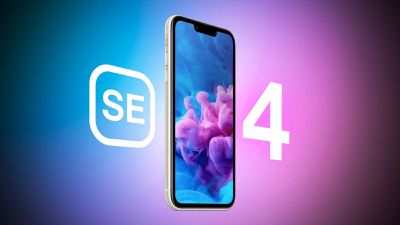
Apple Has Not Finalized Details for iPhone SE 4 Display, 5.7" to 6.1" OLED and LCD Screens Under Consideration - MacRumors

Apple has yet to finalize the display size for its planned 2024 iPhone SE 4, display analyst Ross Young said in a tweet today that was shared with Super Followers. Apple is mulling a number of decisions related to the size of the display and the display material.

iphone se 4 modified
The company is said to be considering 6.1-inch OLED displays from two suppliers, as well as 5.7 to 6.1-inch LCDs from two suppliers. Given this information, it is as of yet unclear whether Apple will go with a 5.7-inch display or a 6.1-inch display, and whether that display will use OLED technology or LCD technology.

An OLED display would be more expensive, with the current ‌iPhone SE‌ model using an LCD display with thick bezels and a Touch ID Home button. Apple's flagship iPhone lineup is equipped with OLED panels, with all models using OLED since the iPhone 12.

It is possible that OLED panels have come down in price enough for Apple to use them for the low-cost ‌iPhone SE‌, especially as it is not set to launch for another two years.

Both the 5.7 and 6.1-inch display sizes have been rumored in the past, including from Young himself. That Apple has not yet made a final decision explains why we continue to hear about two different panel sizes.

Regardless of whether Apple goes with a 5.7-inch display or a 6.1-inch display, Young believes the ‌iPhone SE‌ 4 will feature an all-display design with a notch, but it is not yet known if Apple will introduce Face ID or stick with ‌Touch ID‌, and rumors vary on this point.

Related Stories

The fourth-generation iPhone SE will feature a 6.1-inch LCD display and a "notch" cutout at the top of the display, according to Display Supply Chain Consultants (DSCC) analyst Ross Young. Young told MacRumors that he has revised his expectations for the fourth-generation iPhone SE. In October 2021, Young, who has a very good track record when providing insights into Apple's plans, said that ...

No Sign of iPhone SE 4 With Touch ID Side Button 'Actually in the Pipeline'

Despite years of rumors, there is reportedly no sign of a fourth-generation iPhone SE model featuring Touch ID integrated into the Side button. In a recent edition of his newsletter, Bloomberg's Mark Gurman, who often reveals accurate insights into Apple's plans, said while he can envision a new iPhone SE with a Touch ID button on the side, he hasn't "heard anything about that actually...

Prosser: iPhone SE 4 to Use iPhone XR's Design

The fourth-generation iPhone SE will feature almost exactly the same design as the iPhone XR, according to leaker Jon Prosser. In a video on his Front Page Tech YouTube channel, Prosser said that the fourth-generation iPhone SE will effectively share the design of the iPhone XR from 2018. The change is plausible given that the first-generation iPhone SE's design was based on 2013's iPhone...

Prosser: Fourth-Generation iPhone SE to Adopt Same Design As iPhone XR

Apple will base the next-generation iPhone SE on the design it used for the iPhone XR, claims leaker Jon Prosser, citing new information from his sources. Subscribe to the MacRumors YouTube channel for more videos. In the latest episode of the Geared Up podcast with Andru Edwards and Jon Rettinger (via AppleTrackr), Prosser claims that "The SE 4, from what I understand - and I don't think...

iPad Pro With OLED Display Rumored for Launch in 2024

Tuesday October 18, 2022 11:38 pm PDT by

Apple can be expected to announce 11-inch and 12.9-inch iPad Pro models with OLED displays in 2024, according to display analyst Ross Young. In a tweet, Young said both models of the iPad Pro will come with OLED displays in the early half of 2024. The new M2 iPad Pro models announced yesterday include no display changes, including the lack of a mini-LED display on the smaller 11-inch model....

Apple Suppliers Already Working on Second-Generation OLED iPad

Apple suppliers are already working on display panels for second-generation OLED iPad models, The Elec reports. Samsung Display is said to be in the process of negotiating prices for new Gen 8.5 OLED deposition equipment designed to make OLED display panels for devices like tablets. Samsung is reportedly planning to use the equipment to mass-produce Gen 8.5 OLED panels in late 2024 for the...

Apple Could Adopt Hybrid OLED Technology for Future iPads

Apple's rumored plans to transition to OLED technology for future iPad models could involve using "hybrid" OLED technology that combines both rigid and flexible OLED panel materials, according to The Elec (original Korean-language version). The report claims that Apple is reluctant to rely solely on the flexible OLED technology it uses in its iPhone models, as the panels have a tendency to...

The MacRumors Show: Ross Young Talks Major iPad and Mac Rumors for 2023 and Beyond

Display analyst Ross Young joins us on The MacRumors Show podcast this week to discuss some of his biggest leaks about Apple's plans for the next year and beyond. Subscribe to the MacRumors YouTube channel for more videos Ross is co-founder and CEO of Display Supply Chain Consultants (DSCC), a leading display market research firm, and has worked throughout the display supply chain. Ross is...

Popular Stories

iOS 16.2 Expected to Launch in Mid-December With Several New Features

iOS 16.2, the next major update to the iOS 16 operating system, can be expected to launch in mid-December alongside iPadOS 16.2, reliable Bloomberg journalist Mark Gurman said today in his Power on newsletter outlining expectations for the remainder of 2022. The first beta of iOS 16.2 and iPadOS 16.2 was released for developers and public beta testers last week, so it's still early to...

Gurman: Apple Planning No New Mac Releases For Remainder of 2022

Apple is not planning to announce any new Macs in the remainder of this year, with all planned releases expected to take place in the first quarter of 2023, including updated versions of the MacBook Pro, Mac mini, and the Mac Pro, Bloomberg's Mark Gurman said today. Writing in his latest Power On newsletter, Gurman said Apple has decided to wait until next year to announce new Macs,...

Rumor: New 14-Inch and 16-Inch MacBook Pros Delayed Until Next Year

Contrary to rumors that Apple will announce new 14-inch and 16-inch MacBook Pros powered with the yet to be announced M2 Pro and M2 Max chips in November, a new rumor has suggested Apple will instead release the new laptops next year. According to a post from the account "yeux1122" on the Korean blog Naver, citing a supply chain source, the updated 14-inch and 16-inch MacBook Pro models will ...

Top Stories: New iOS 16.1 Features, USB-C iPhone Confirmed, and More

October is drawing to a close with plenty to talk about in terms of new hardware and software releases from Apple, while we're also looking ahead with iOS 16.2 and future hardware. Read on below for all of the details on everything Apple released this week, including our early hands-on look at Apple's new iPads, plus a rumor about Apple's biggest-ever iPad and more! iOS 16.1 Released:...

Some Instagram Users Report Problems Accessing Accounts

Instagram is currently experiencing an outage in some parts of the world, according to user reports on Twitter and Downdetector. As a result of the outage, some users are reporting that their accounts are being locked and/or suspended for "violations" and some have reported a sudden decrease in follower count. In a tweet, Instagram said it's aware of the problems and is working to fix them. ...

Here Are All the Apps That Have Added Live Activities and Dynamic Island Support for iOS 16.1

The iOS 16.1 update that was released today introduces support for Live Activities, a new type of lingering Lock Screen notification that lets you track information in real time. Live Activities are visible primarily on the Lock Screen, but if you have an iPhone 14 Pro or Pro Max, they also show up in the Dynamic Island. Developers are beginning to implement support for Live Activities, and...

Adblock test (Why?)


Apple Has Not Finalized Details for iPhone SE 4 Display, 5.7" to 6.1" OLED and LCD Screens Under Consideration - MacRumors
Read More

You could soon send messages to yourself on WhatsApp - SamMobile - Samsung news

While WhatsApp has been gaining a bunch of features, such as the increased number of members in a group chat, the ability to turn yourself into a sticker, and creating group polls, it is still playing catch up to its rivals, such as Telegram and Slack. Those messaging services allow you the option to save messages for later and message yourself.

This small but useful service isn’t currently available on WhatsApp. Thankfully, that might change in the coming months. According to a new report by WABetaInfo, WhatsApp is testing a self-messaging feature that would, as the name implies, allow you to send messages to yourself more easily. Some people like to do that to remind themselves of some things or to save important data.

Apparently, you can still message yourself on WhatsApp by using the wa.me (Click to Message link) or by creating a group in which you are the only member. But that isn’t a great way to message yourself. Messaging yourself can come in handy if you wish to transfer files between your devices or want to save an important message to send later.

whatsapp-self-messaging-feature

A few WhatsApp beta users are already seeing the “Message yourself” option

Since WhatsApp comes with multi-device support, you can send files and documents between your devices pretty easily using WhatsApp’s self-messaging feature.

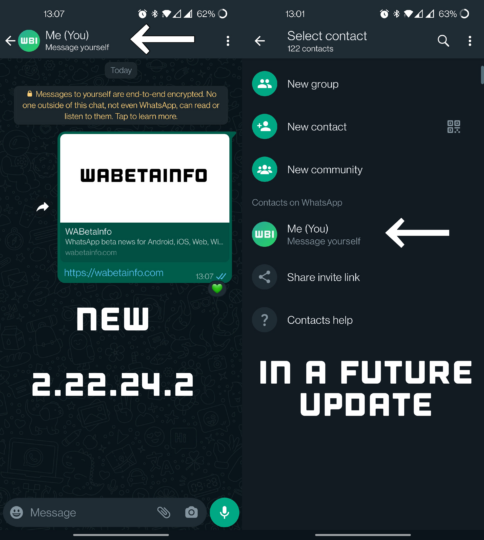
This new feature was spotted in the WhatsApp v2.22.24.2 beta release of the Android app. Moreover, WABetaInfo also noted that a few select users are already getting access to try out the “Message yourself” feature. In this, WhatsApp has added a chat option ‘Me (You)’ to send messages to yourself.

When you tap on the floating action button at the bottom right corner, it will give you the option to send a message to a new chat, a new group, or a new community. Below them, you will find your contact list, with the ‘Me (You)’ option sitting right at the top of your WhatsApp contacts.

Adblock test (Why?)


You could soon send messages to yourself on WhatsApp - SamMobile - Samsung news
Read More

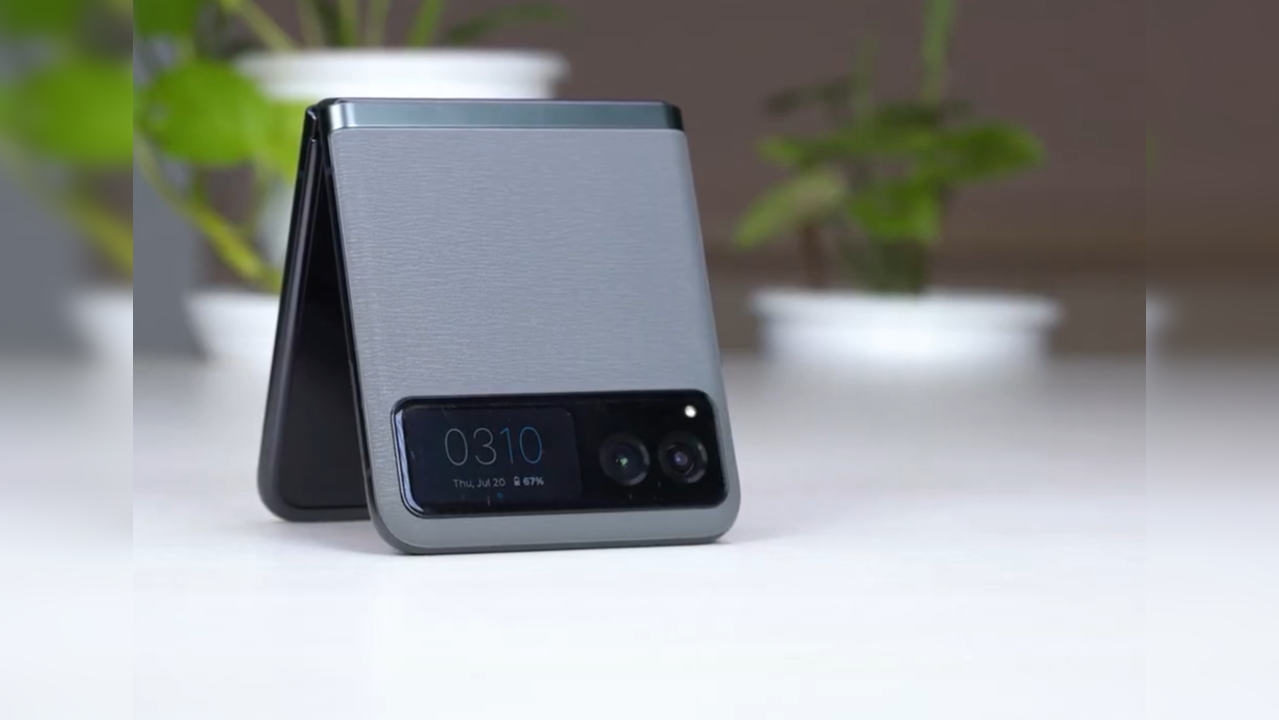
Motorola Razr 40 And Razr 40 Ultra Are Cheaper By Up To Rs 20,000 In India - Times Now

Motorola Razr 40, Razr 40 Ultra Prices Slashed in India; Foldable Phones Now Start at Rs. 44,999 Motorola has announced an attr...